
The unprecedented acts of evil perpetrated against the Jewish state from 7 October have once again brought to the forefront the usual moral equivocators and calls for de-escalation on both sides of the conflict. As time passes and the brutal acts of Hamas are no longer front of the public’s mind, this moral blind spot will only increase, and the victim will once again be painted as the perpetrator. There are self-professing Christians who have been engaging in this type of moral equivalency, suggesting we should support both sides equally and expressing concern about the anticipated Israeli retaliation, while failing to speak out against barbaric acts such as the brutal murder and beheadings of babies. This vacuous virtue signalling and lack of courage to take a moral stand calls to mind the Church’s silence during the Holocaust.
Even if Israel were at fault in the conflict, as some will argue, this level of brutality could never be justified. Nevertheless, it is helpful to review the facts and history of the so-called Israeli-Palestinian conflict. What do the Palestinian leadership want, and would a two-state solution resolve the conflict? Should we prevent taking sides in the name of peaceful coexistence? As Christians, it is our duty to seek and uphold the truth and what is just, not to perpetuate a false narrative simply because it sounds ‘nice’ and allows us to get along with the world. In fact, morally equivocating on this conflict does the exact opposite. It leads to more bloodshed and violence on both sides, but as we have seen, particularly for the Jewish people. Some will claim Christians who support Israel merely do so only for theological reasons or to further an eschatological agenda. But the fact is that supporting Israel is simply the moral thing to do, regardless of any theological motivations for doing so.
I note that when referring to the overall Palestinian cause, I am not suggesting we should be unsupportive of efforts to improve the lives of innocent Palestinians. For the most part what will be scrutinised here is the Palestinian leadership, the motives of the pro-Palestine movement at large and how these are detrimental to both Israel and innocent Palestinian people. I contend that helping innocent Palestinians involves liberating them from their corrupt, Anti-Semitic leadership. Helping Palestinian children means putting an end to their indoctrination into hatred towards Jewish people. Additionally, supporting Palestinians cannot come at the expense of the security and very existence of the one Jewish state.
The crux of the issue is that the Palestinian collective ethos has been characterised by a negation of the right of Jewish people to live in their ancestral homeland, and a culture of Islamist martyrdom and Anti-Semitism. The role of religion, with the Palestinian leadership framing the conflict in the context of the global jihad, is a central factor ignored by much of the Western press. Make no mistake: this is not about ‘settlements’ or negotiations over this or that territorial boundary; it is about driving out the Jewish people ‘from the river to the sea’. It is time we recognised the true motives of this movement. Only then can the lives of both Israelis and innocent Palestinians be improved for the better.
Who are the Palestinians?
The mainstream media and academia paint the Palestinians as an oppressed, occupied people who are struggling for self-determination against colonizers in what is ostensibly their homeland. In actual fact, there has never been a distinct Palestinian nation in what today constitutes the land of Israel, including the disputed territories.
The term ‘Palestinian’ is derived from the Roman Empire’s re-naming of the land of Israel in 135 CE, following the second Jewish insurrection. The Romans re-named the province ‘Syria Palestina’ as a way to mock the Jewish people by linking the province to their ancient rivals, the Philistines.1 ‘Palestina’ was referring to the Philistines, who have no relation to the Palestinians today. The term Palestine was subsequently used to refer to the geographic region, eventually culminating in the British Mandate for Palestine.
Since the expulsion of the Jewish people from Judea, many empires came to conquer only to be conquered, including the Romans, the Crusaders, various iterations of the Islamic empire, the Ottomans and the British. Strikingly, during the times of Islamic occupation, not once was a distinct Palestinian people group recognised. By contrast, there has always been a Jewish remnant in the land, even after exile.2 Even in exile, the Jewish people always maintained their biblical and historical bond to the land, singing every Passover, ‘Next year in Jerusalem‘.
There is a common misconception that the modern Zionist movement stole or usurped the land from the Arabs in Palestine, but this could not be further from the truth. As stated above, there was no Palestinian nation to usurp. If there was anyone who could complain about land stolen, it was the Jewish people themselves. After all, the size of the original area committed to Israel in the mandate was remarkably reduced by 1947. In 1921, Winston Churchill severed roughly three-fourths of Palestine into Transjordan, handing it to the Hashemites, which we know today as the kingdom of Jordan.3 The remaining land was then partitioned even further. Nor did the Zionists arrive as bandits stealing and conquering land, but rather through land purchase, acquisition and immigration, which actually benefited Arabs. Rather than disrupt and displace Arab society, the Arab population actually grew as a result of Jewish development, job creation and higher living standards.4 The Peel Commission Report in 1937 noted this phenomenon, and even Winston Churchill remarked in 1939, “.. far from being persecuted, the Arabs have crowded into the country [Palestine]”.5 Prior to the Jewish people’s remarkable revival of the land, many prominent travellers and writers, including Mark Twain, had lamented the desolate state of the holy land.6
In 1947, the United Nations approved a plan to partition Palestine into a Jewish and Arab state, however, the Arabs rejected this. Following Israel’s declaration of independence in May 1948, five Arab nations immediately declared war on Israel. This culminated in a ceasefire agreement in 1949, with a temporary armistice agreement whereby the West Bank (Judea and Samaria) became part of Jordan and Gaza went to the Egyptians.7 This situation persisted until the Six-Day War, when Israel won these territories back in a defensive war. It’s important to note that between 1949 and 1967, neither Egypt nor Jordan established a state of Palestine, nor were they called upon to do so. Israel did not ‘occupy’ any Palestinian state.
The rejectionist nature of the Palestinians persists today. Israel has offered the Palestinians generous deals multiple times, only to be rebuffed. Just one of many examples was in 2000, when Prime Minister Ehud Barak offered Palestinian Liberation Organization (PLO) leader Yasser Arafat unprecedented concessions. As an opening bid at Camp David, Barak offered Arafat the Gaza Strip, 92 per cent of the West Bank and most of East Jerusalem for a Palestinian state.8 Arafat rejected the proposal without offering an alternative of his own and instead reverted back to terrorism through the initiation of the Second Intifada.9 Current Palestinian Authority (PA) Leader Mahmoud Abbas has repeated similar patterns. In 2008, Israel’s Prime Minister Ehud Olmert offered Abbas a deal based on the return to the 1967 borders and a demographic arrangement which would only see heavily Jewish areas in the West Bank remain under Israeli control. Olmert and Abbas reached an interim agreement on the Palestinian right of return, but Olmert never received a final response on the matter.10With such generous offers rejected, it begs the question: what do they actually want?
The Grand Mufti of Jerusalem
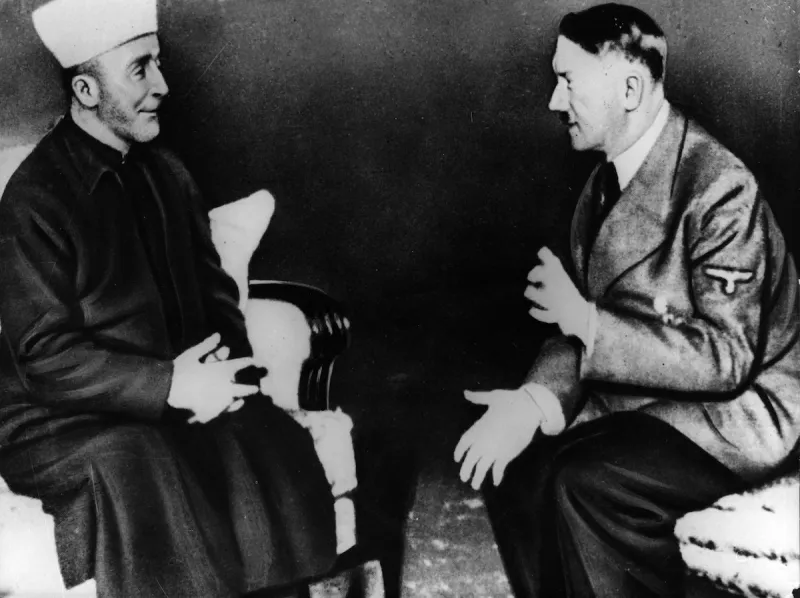
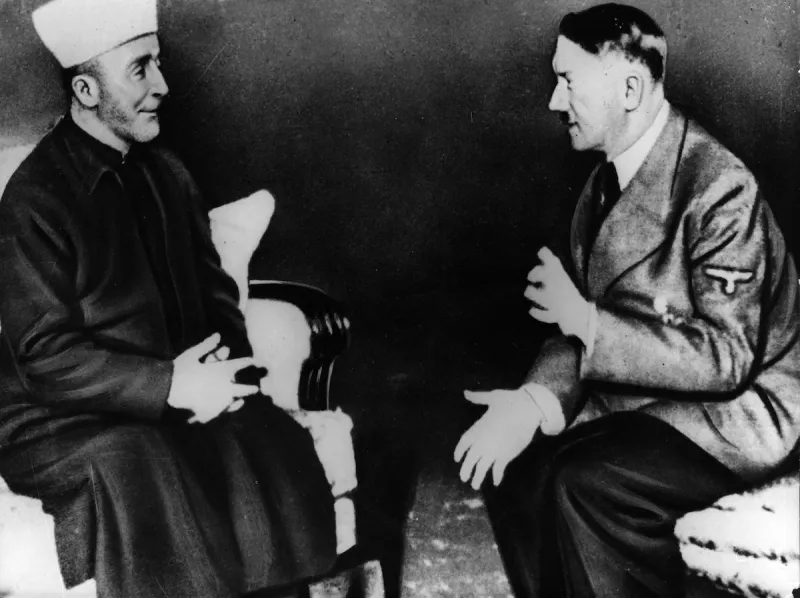
Many people will claim the root of the conflict is about territorial boundaries, when in reality it is about Anti-Semitism and Islamist Jew hatred. The Palestinian political movement indeed has a legacy and deep roots in perpetuating Anti-Semitic tropes and conspiracy theories, using a mix of both Nazi and Islamist ideology. As Dan Diker notes, the first Palestinian Arab political leader, the Grand Mufti of Jerusalem, Haj Amin Al-Husseini, was closely aligned with the Nazi regime. 11 The Mufti was a leading figure of the Palestinian national movement from the time of his appointment as Grand Mufti in 1921 to Israel’s war of independence in 1948.12 Between 1941 and 1945, he was a major contributor to Nazi Arab language propaganda in the Middle East.13
The Mufti not only allied with and received support from the Nazis but even met Hitler himself on November 28, 1941.14 During the meeting, the Mufti expressed that the Arabs were Germany’s natural friends because they had the same enemies, including the Jews, and therefore they were prepared to cooperate with Germany and participate in the war, including through the formation of an Arab legion.15
The Mufti also received a letter of praise from the chief architect of the Final Solution, head of the SS Heinrich Himmler, stating, “The National-Socialist movement of greater Germany has made its fight against world Jewry a guiding principle since its very beginning. For that reason it has been closely following the battle of freedom-seeking Arabs—and especially in Palestine—against the Jewish invaders“.16 Additionally, photographic evidence shows the Mufti accompanied Nazi officials for a visit to the Trebbin concentration camp in 1942.17
Similar to the Palestinian leaders today, the Mufti would accuse the Jewish people of desecrating the Al-Aqsa Mosque and depicting Jewish worshippers as ‘evil marauders’. These libellous statements ignited violent anti-Jewish riots in the 1920s and 1930s.18 As Diker points out, Al-Husseini distributed Nazi propaganda across the Middle East, fusing this with his Islamism. This included a widely distributed ‘Proclamation to the Muslim Word’, stating: “Since the earliest days of their history, the Jews have been an oppressed people, and there must be a good reason for that. As far back as the Egyptian pharaohs, energetic oppressive measures had to be taken against the Jews…. The Jews hate Muhammad and Islam…. The battle … began when Muhammad fled from Mecca to Medina…. The Jews have been the bitterest enemies of Islam and continue to try to destroy it. They know only hypocrisy and guile. Hold together, fight for Islamic thought, fight for your religion and your existence! Do not rest until your land is free of the Jews”.19
As we will see further below, such an infusion of old-fashioned European Anti-Semitism with Islamism persists in the Palestinian movement today.
Are the Palestinian Authority partners for peace?
The PLO, arguably the most infamous terrorist organisation prior to Al-Qaeda, was created in 1964 during an Arab League Summit in Cairo, with the stated goal of ‘liberating Palestine through an armed struggle and destroying Zionism in the Middle East.20 By 1967, this goal was further refined as the destruction of Israel. Following this, the organisation splintered into various factions, including Fatah, which eventually took on leadership under Yasser Arafat.21 Prior to the formation of the PLO, the Palestinians lacked a formal political influence or presence, with the Arab states leading conventional conflict against Israel up until the Yom Kippur War. The PLO was responsible for many high-profile terrorist attacks, including the Munich massacre, and various other acts of hijackings and bombings.
Since the Oslo Peace Process began in 1993, the international community has been obsessed with achieving a ‘two-state solution’ between Israel and the Palestinians. The Oslo Process involved Israel’s acceptance of the PLO as the legitimate representative of the Palestinians and partner for peace negotiations. This culminated in both sides signing a series of agreements, including to establish interim self-rule of the PLO in certain areas of Judea and Samaria, pending talks on final status issues such as borders, settlement and the status of Jerusalem.22 The Palestinian Authority was established as the governing body in the territories, with the PLO at its helm. The ultimate goal was to prepare the Palestinians for statehood. What instead resulted from these peace talks was more bloodshed, violence and further radicalisation of the Palestinians. This is due to the fact that the Palestinian leadership never truly sought peace, but rather viewed the peace talks as a step forward in their ultimate goal of completely driving the Jewish people out ‘from the river to the sea’. Thus, it is imperative that the world drop the pretense that negotiating with the current Palestinian leadership is a panacea to peace.
There is a prevailing idea that the PA are the ‘moderates’ who should be funded and empowered as a counterweight to the more radical groups such as Hamas. However, this has been proven erroneous, naïve and has led to a perpetuation of the conflict. The Oslo framework for peace imposed a top-down situation whereby a terrorist organisation was legitimised practically overnight and expected to reconstruct itself into a government entity. However, after the signing of Oslo, rather than prepare its population for an end to the conflict and a future of peaceful co-existence with the neighboring Israeli state, the PA continued inciting its population through the media and education system.23 As a result, the goals and ideas that had initially shaped the Palestinian movement, which negated the existence of a Jewish state, were never challenged during Oslo and the constitution of Fatah continued to be characterised by a struggle against Zionism.24 In doing this, it failed to break the multi-generational culture of “resistance”, and continued to ingrain the false hope of the ‘right of return’ in Palestinian society, hindering true recognition of the Jewish state and ultimately a final settlement.
Former and now deceased PLO leader Yasser Arafat’s entry and participation in the Oslo Peace Process was merely a temporary tactical move to solidify his power and secure Western funding. His revolutionary struggle against Israel was never genuinely abandoned in favour of peace. From the outset, Arafat’s willingness to commence talks with Israel was self-serving, as following the First Intifada and the rise of Hamas, the Palestinian people began to view the PLO as increasingly irrelevant.25 To that end, Arafat was in desperate need to retain his legitimacy as the true leader of the Palestinians. The PLO had also been suffering a financial and political crisis as a result of Arafat’s tactical mistake of supporting Sadaam Hussein in the Gulf War. The flow of funding from the Gulf States had ceased and hindered the organisation’s ability to provide services to the population. Coupled with this, Soviet funding was no longer forthcoming as the Cold War had ended. This provided further legitimacy to groups like Hamas and Islamic Jihad who began to fill the vacuum.26 Hence, Arafat had much to gain financially and politically, if even temporarily, from Israel and the international community anointing the PLO as the legitimate representative of the Palestinians.
Arafat’s disingenuous motives were typified throughout the process by both his enablement of terrorism and his doubletalk. To English speaking audiences, Arafat attributed any violence to Hamas, even though the PLO was complicit. For example, in an interview with Jerusalem Post, former PLO paymaster Fuad Shubaki admitted that Arafat had used international aid to purchase arms for terrorists and conceded that senior commanders within PA security services had also paid for terrorist attacks against Israel.27 The events immediately following the signing of the Cairo Agreement in 1994 further illustrate Arafat’s duplicity. The agreement provided for the transferral of Jericho and Gaza to PLO control, with Arafat leading the newly formed PA to govern the territory.28 Following the agreement, Arafat requested that Israel release terrorists so that they could serve in the Palestinian security services. Prime Minister Yitzak Rabin approved the entry into the forces of all but four of the requested terrorists. In response to this, Arafat smuggled the terrorists in his car.29 Arafat also brought Hamas members into PA security services.30
Arafat’s true intentions were further exposed in a speech he gave in a Johannesburg mosque a week after signing the 1994 agreement. In the speech, Arafat stated that the agreement signed between the PLO and Israel was a modern version of the “Treaty of Hudaibiya”. This refers to a peace treaty which the Prophet Muhammad signed with the Quaraish tribe in Mecca which was renounced after two years when the power shifted back into Muhammad’s favour. Arafat stated: “This agreement, I am not considering it more than the agreement which had been signed between our prophet Mohammed and the Quarish…Mohammed had accepted it, and we are accepting now this peace offer. But to continue our way to Jerusalem, to the first shrine together and not alone. We are in need of you as Muslims, as warriors of Jihad“.31 This shows that Arafat was not committed to disavowing terrorism in favour of a genuine peace process and continued to frame the conflict in the context of the jihad. Indeed these comments are consistent with the PLO’s so-called ‘phased plan’, implying Oslo was just a tactic step towards the complete liberation of Palestinian from Israel. 32
Arafat also continued the indoctrination of the Palestinian population with Anti-Semitic propaganda. In the Oslo Interim Agreement, both sides vowed to foster mutual understanding by refraining from and preventing incitement from institutions under their jurisdiction. The PA violated this during and following Oslo, with incitement in the Palestinian school system and media continuing to indoctrinate and incite the population.33 Under perceived moderate and current PA leader Mahmoud Abbas, the propaganda continues. Schoolbooks encourage jihad against Israel and evoke old-fashion Anti-Semitic canards.34 Much of the propaganda is reminiscent of the “Protocols of the Elder of Zion” forgery which once fuelled European pogroms. Children are also encouraged to become martyrs in order to further the cause. Remarkably, as we will see, United Nations Relief and Works Agency for Palestine Refugees in the Near East (UNRWA) materials for Palestinian children have also been characterised by such rhetoric. In a post Holocaust world, it is little wonder why Israel has security concerns given that such ideas are propagated only a short drive away.
Recently, in a speech made to the 11th session of Fatah’s Revolutionary Council, Abbas made the remark that ‘Hitler and the Europeans did not kill the Jews “because they were Jews”, but rather they fought the Jews because of “their social role, and not their religion.” Abbas explained that Hitler “fought” the Jews because they dealt with usury and money, not because of antisemitism.35 This should not be surprising, given Abbas wrote a PhD thesis in 1982 in which he claimed Zionists collaborated with the Nazis against European Jews, Zionism and Nazism derive from the same ideology and that the figure of six million Jews killed during the Holocaust was exaggerated by Zionists for political profit. Abbas also wrote a book asserting that Zionist Jews were responsible for the annihilation of European Jewry during the Holocaust.36 Does this sound like something Israel should tolerate on its borders? Does it sound like the words of a genuine partner for peace?
Despite the promise of Oslo, the PA has also fostered a society of corruption instead of transitioning to a democratic society necessary for peace. A snapshot of this is evident in US Congressional records revealing documents signed by Yasser Arafat indicating he instructed his staff to divert money to projects benefiting himself, his family and associates.37 The PA also squandered foreign aid on funding terrorist activities, for instance to the al-Aksa Martyrs Brigade and other activities implicating the PA itself, such as the Karine A ship which attempted to smuggle weapons for terrorists. 38 The PA continues to incentivise terrorism and enrich itself with money that could instead be used for the betterment of the Palestinian population. An example is the infamous ‘pay for slay’ program, whereby the PA makes payments of stipends to the families of jailed or slain terrorists through what it calls a ‘Martyrs’ Fund’.39
The PA have never ceased to be regarded as a partner for peace despite its actions demonstrating that it it has not genuinely committed to nurturing democratic institutions and ceasing the enablement of terrorism. As Jonathan Schanzer highlights, following the Palestinian civil war in 2007, Washington threw its resources at Abbas in the belief that he was a moderate alternative to more extremist elements. Yet, in doing this the US convinced Abbas that nothing could compromise their support and as a result he was never sufficiently scrutinised”.40
Israel’s political system is built on democracy and a strong rule of law, resulting in a culture in which violence is shunned, while constant scrutiny by the international community and media further keeps it accountable. Conversely, the PA’s kleptocratic government has nurtured a society which has little faith in its leadership and views violence as a legitimate means of resistance, while facing little accountability by the international community. A lack of democratic principles and rule of law undermines the PA’s legitimacy as the representative of the Palestinian population, and correspondingly, if Israel were to pull out of the territories, this would likely result in them falling into the hands of Islamist groups like Hamas, as was the case with Gaza. Indeed, it is not hard to envision a situation where upon Israel withdrawing the territories, the PA would again be overtaken by more radical Iranian groups such as Hamas. In fact Iranian proxies and more radical groups have increasingly gained ground in the West Bank.41 As Foundation for Defence of Democracies analyst Joe Truzman has noted, “The PA’s rule in pockets of the West Bank has weakened over time thus leading to militant organizations strengthening their positions and expanding their activity in a handful of Palestinian cities. While militant activity has not developed to the level it was during the second intifada, the growing trend in violence presents a significant challenge which will likely continue if major changes are not implemented by the IDF and the PA“. 42 The last thing Israel needs is more jihadist groups on its doorstop.
UNWRA and the ‘right of return’
Much is also made of the so-called Palestinian’ ‘right to return’ for refugees. Following and during War of Independence, many Arabs fled or were compelled to leave Israel amidst the fog of war. However, as Schwartz and Wilf note, expulsions and population exchanges were quite common during the many conflicts of the twentieth century. 43 While some will claim Palestinians were expelled by the Jewish people out of hand, the fact is their departure was a result of them waging war on Israel, so this was not an inevitable situation.44 Estimates of the total number of Palestinians who fled or expelled range from 500,000 to 900,000, but the exact number is not known and estimates tend to range in the middle.45 Many Arabs fled simply out of fear or because the Arab leadership were calling on them to flee, thinking they could return after their expected victory. The fleeing of Arabs surprised Prime Minister David Ben-Gurion, who wrote in his diary, after visiting Jaffa and seeing that thousands of Arabs fled, ‘I couldn’t understand…Why did the Arabs leave?’.46 Israel’s Declaration of Independence also called on the Arabs to return to peace, accept full rights of Israeli citizens and contribute to the building of the state: “In the midst of wanton aggression, we yet call upon the Arab inhabitants of the State of Israel to return to the ways of peace and play their part in the development of the State, with full and equal citizenship and the representation in all its bodies and institutions, provisional or permanent”.47 From the beginning, Israel was always willing to co-exist with Arabs living in the land. But as we have seen, this was unfortunately unreciprocated.
It should also be noted that hundreds of thousands of Jews were also forced to leave their homes in Arab nations both during and after the war. Between 1947 and the mid-1950, ancient Jewish communities which existed in Egypt, Iraq, Syria, Libya and Yemen, from before the birth of Islam, were virtually eliminated. This was due to expulsions, acts of violence, pogroms and steps by governments such as revocations of citizenship and property confiscation.48 While Israel absorbed the Jewish refugees, Arab nations did not reciprocate for their Arab brethren.
A key part of the perpetuation of the conflict is the fact that the Palestinian refugees are the only refugee group in the world whose numbers are artificially on the incline. This is due to the definition of Palestinian refugee coming under the unique criteria of UNWRA. This allows the Palestinian leadership to perpetuate the ‘right of return’ narrative, which would lead to a demographic crisis for Israel and thus nullify its status as a Jewish state. Abbas once stated, “The right of return is a personal right. If you are a refugee, your son is a refugee as well”, and correspondingly, he added, “What we do not want to accept is the “Jewish state”. We shall never agree to recognise the Jewish state”.49 Abbas understands that the right of return of the refugees (which he numbers as 5 million) would demographically annul the Jewish character of Israel. This position presupposes that Israel cannot be recognised by the Palestinians as the Jewish state, preventing a final peace settlement.
UNRWA was created in 1949 in response to the Palestinian refugee crisis that arose in the wake of the first Arab-Israeli war. 50 Its original emphasis was on reintegration but this was discarded in the 1950s in favour of a focus on education, welfare and shelter-building.51 In this respect, it is important to note that the Palestinians are the only refugee group which are dealt with under a separate UN body and criteria, while most refugee groups are dealt with through the United Nations High Commissioner for Refugees (UNHCR). UNRWA uses a wider definition of what constitutes a refugee, and this explains why the Palestinian refugee issue persists. The UNHCR defines refugees as a “person who is outside his or her country of nationality or habitual residence; has a well-founded fear of being persecuted because of his or her race, religion, nationality, membership or a particular social group or political opinion; and is unable or unwilling to avail him- or herself of the protection of that country, or to return there, for fear of persecution”.52 By contrast, UNRWA defines a refugee as “any persons whose normal place of residence was Palestine during the period 1 June 1946 to 15 May 1948, and who lost both home and means of livelihood as a result of the 1948 conflict”, while the descendants of Palestinian refugee males, including legally adopted children, are also eligible for registration.53 This by definition has unnecessarily inflated the number of refugees, rendering eligible even those and their children who have settled in another country.
According to the UNHCR, one ceases to be a refugee when “he becomes naturalized in his host country or gets absorbed there”. In contrast, UNWRA states a Palestinian refugee will cease being a refugee only if and when he will return to Palestine.54 As Shabtai Shavit explains, “Palestinians acquire life-long membership as a unique class of refugees, and their refugee status is transferred to their children”.55 If the UNHCR criteria were applied to the Palestinians, the right of return would be largely resolved, cutting out a major obstacle to peace by opening the space for the acceptance of Jewish self-determination in Israel. By framing refugees in this way, UNRWA perpetuates a problem which would have been dealt with in any other refugee situation. Thus, by definition, UNWRA perpetuates the right of return narrative and unnecessarily fuels the conflict even further.
UNRWA also protracts the conflict by its complicity in indoctrinating Palestinians into viewing Israel as an illegitimate entity. In doing this, it has failed to fulfil its mandate to provide conditions conducive for peace, alternatively creating a permissive environment which promotes anti-Semitic attitudes mirroring that of the PA and Hamas. UNRWA, maintaining close cooperation with government education authorities in its areas of operation, uses curriculum authorized by host governments (except for East Jerusalem where it uses the PA curriculum). Rather than helping to resolve the conflict by promoting peace and tolerance, UNRWA’s textbooks demonize Jews and deny their rights in Israel, while also promising the right of return to children from a young age.56 It has hosted camps where children are taught to hate Jews and encouraged to strive towards returning to their villages in Israel, subsequently negating Israel’s existence as the Jewish state.57 UNRWA by its very nature fuels the conflict, and indeed if it were to resolve the conflict it would cease to exist as an entity, consequently offering it little incentive to promote peace. To quote Palestinian human rights activist Bassem Eid, “UNRWA, to continue its operation, depends on death and the visual suffering of five million Palestinians who continue to wallow in and around UNRWA facilities. The more Palestinians suffer, the more power goes to UNRWA, which allows it to raise unchecked humanitarian funds and purchase munitions. 58 And yet, Western taxpayer money continues to flow to UNWRA.
The Gaza withdrawal
Israel’s withdrawal from Gaza and the subsequent response of the Palestinians further challenges the notion that they are open to peace with Israel. The withdrawal was intended to give the PA the chance to demonstrate its commitment to ruling the Gaza Strip as a peaceful neighbour that was willing to focus on economic development. In August 2005, the plan of a full withdrawal was set into place and included the full dismantlement of Israeli settlements.59 However, things took a detrimental turn when Hamas was elected in Gaza in 2006. Unlike the PA, Hamas is much more open in its Anti-Semitism and rejection of Israel’s existence, as reflected in its own Charter, which we will see further below. Hamas’ control of Gaza has proven detrimental for both Israel and the Palestinians. For Israel, it has meant a necessity to defend itself from Hamas rockets, brutal terrorist attacks and kidnappings. Hamas also commits human rights abuses on its own population via political executions and the use of human shields, including installing military infrastructure and launching rockets near and from schools and hospitals.60 Like the PA, it has prioritised violence as opposed to building a state and improving the lives of Gazans, often using supplies from the international community for terrorism. For instance, cement supplied to Hamas to rebuild following Operation Cast Lead was used to build military infrastructure such as the tunnels exposed during the recent Operation Protective Edge. 61 Even when Gaza was ruled by the PA, opportunities for development were squandered. Israel had left behind a thriving agricultural industry in Gaza prior to its withdrawal which the Palestinians failed to capitalise on. In one instance, donors had purchased greenhouses from evacuated Gush Katif settlers for the benefit of Palestinians. However, the Fatah affiliated militias which had been hired by the PA to guard the greenhouses robbed and ransacked them instead of guarding them and allowing for their cultivation.62 As we can see, the withdrawal from Gaza has only led to further chaos, which brings us to the situation today.
Hamas’ ideological foundations
Hamas is the Palestinian arm of the Muslim Brotherhood and receives backing from Qatar and Turkey. Although these countries insist they only support the group politically, they have been accused of providing funding and offering safe havens to Hamas members in their countries.63 Nowadays, Iran is one of Hamas’ biggest benefactors, providing some $100 million to the group annually and providing weaponry and training via Iran’s Islamic Revolutionary Guard Corps.64 This is despite Hamas being a Sunni group and Iran being Shiite – they work together to defeat the common enemy.
Hamas’ Charter evokes Anti-Semitic canards not dissimilar to the Nazis and uses Islamic eschatology to frame conflict with Jewish people as part of a holy war. For example it states: The Day of Judgment will not come about until Moslems fight Jews and kill them. Then, the Jews will hide behind rocks and trees, and the rocks and trees will cry out: ‘O Moslem, there is a Jew hiding behind me, come and kill him.” (Article 7). 65 Additionally it states, “The land of Palestine is an Islamic Waqf [Holy Possession] consecrated for future Moslem generations until Judgment Day. No one can renounce it or any part, or abandon it or any part of it.” (Article 11). This is just a taste of what is written in this highly anti-Semitic and violent document. 66
Given this ideology, the horror that has been unleashed on the state of Israel since 7 October should not come as surprise. The mix of Anti-Semitism, Islamist ideology and indoctrination has culminated in the complete dehumanisation of Jewish people by the Palestinian society. This has always been out in the open, but both the West and most Israeli leadership have been so eager for a peaceful settlement that they have striven to overlook this, in hopes that innocent and more moderate Palestinians would rise up and take the leap into a peaceful solution.
As we have seen, the PA is no moderate alternative, nor does it have legitimacy with its people. Of course, there are innocent Palestinians who are stuck in the middle. But as a whole, we must pay attention to the loudest voices in the room, as these define the movement and determine future steps in the conflict. We see calls for gassing the Jews in Sydney and protests supporting Hamas breaking out all across the world, with no regard for the brutal murder of innocent Israeli families and children. These protests are ostensibly standing up for injustice against Palestinians. However, if this were truly the motive, they would be protesting against Hamas and the Palestinian leadership, who have put their own population in harm’s way. What we have instead witnessed is Anti-Semitic protests. At a recent rally in Melbourne, there were reportedly chants of ‘from the river to the sea’ and ‘Khaybar Khaybar ya yahud’.67 The latter evokes the battle of Khaybar, in which Prophet Muhammad led a battle against the Jewish people living in Khaybar near Medina. Once again, we see the use of old-fashioned Anti-Semitism fused with Islamic narratives to incite against Jewish people.
A culture of Anti-Semitism and jihad
As has been shown above, the Palestinian political movement is ideologically rooted in Anti-Semitism, both of the old-fashioned medieval kind and the Islamist kind which views Israel in the context of an eschatological battle, which ends with the destruction of Jewish people unless they convert to Islam. This is the crux of the issue, and explains why the Palestinian leadership has squandered multiple opportunities to peacefully resolve the conflict. Added to this is the naivety and appeasement of the international community and the United Nations, who continue to perpetuate the two-state solution while willfully ignoring the Anti-Semitic culture deeply ingrained in Palestinian society. Furthermore, they have done nothing to curb the influence of Iran in further radicalising Palestinian society. The conflict is further perpetuated by UNRWA, which was ostensibly set up to improve the lives of Palestinians, but fuels the conflict by upholding the ‘right of return’ narrative and keeping Palestinians in a state of perpetual victimhood rather than working to truly improve their lives.
This is a dilemma of spiritual proportions. As Christians, spreading the gospel is integral to changing hearts and minds, particularly of the Palestinians. We also need to understand that if we want to help innocent Palestinians, the best way to do this is by supporting their liberation from their corrupt leadership and radical ideology. But we also need to stand with Israel against such evil. Leading up to and during the Holocaust, much of the Church remained silent. But in the face of such evil which we have witnessed in Israel over the past few weeks, we have a duty to understand the ideology which fuels it and stand up against it.
We must also reflect again on the core reason Jewish people have been targeted relentlessly, not only today, but for thousands of years leading up to this. It is the woman’s seed versus the serpent’s seed (Genesis 3:15). This is not merely geopolitical; it is spiritual warfare.
- Douglas J Feith 2021, The Forgotten History of the Term ‘Palestine, Hudson Institute, https://www.hudson.org/node/44363 ↩︎
- The Historical Presence of the Jews in the Land of Israel, Your Jewish Journey, https://bje.org.au/knowledge-centre/israel/history/historical-presence/ ↩︎
- Jewish Virtual Library, When Churchill Severed Transjordan From Palestine
https://www.jewishvirtuallibrary.org/when-churchill-severed-transjordan-from-palestine ↩︎ - Moshe Aumann 2017, Land Ownership in Palestine, 1880-1948, Rohr Jewish Learning Institute, https://lessons.myjli.com/survival/index.php/2017/03/26/land-ownership-in-palestine-1880-1948/ ↩︎
- Daniel Grynglas 2015, Debunking the claim that “Palestinians” are the indigenous people of Israel, Jerusalem Post, https://www.jpost.com/blogs/why-world-opinion-matters/are-arabs-the-indigenous-people-of-palestine-402785* ↩︎
- Ibid ↩︎
- History.com, 2023, Israel – Facts, History and Conflicts, https://www.history.com/topics/middle-east/history-of-israel#section_1 ↩︎
- Barry Rubin 2012, Israel: An Introduction, 1st ed, New Haven: Yale University Press, pp.56. ↩︎
- Ibid ↩︎
- Haaretz Service 2010, Olmert: Abbas never responded to my peace offer, http://www.haaretz.com/news/olmert-abbas-never-responded-to-my-peace-offer-1.263328 ↩︎
- Dan Diker, Nazi and Soviet Conspiracy Themes in the Palestinian Discourse: Policy Lessons for Israel, Jerusalem Center for Public Affairs, September 3, 2023, https://jcpa.org/article/nazi-and-soviet-conspiracy-themes-in-the-palestinian-discourse-policy-lessons-for-israel/ ↩︎
- Jeffrey Herf 2014, ‘Haj Amin al-Husseini, the Nazis and the Holocaust: The Origins, Nature and Aftereffects of Collaboration’, Jewish Political Studies Review, Vol. 26, No. 3/4 (Fall 2014), p 14 ↩︎
- Ibid ↩︎
- Full official record: What the mufti said to Hitler, 2015, Times of Israel https://www.timesofisrael.com/full-official-record-what-the-mufti-said-to-hitler/ ↩︎
- Ibid ↩︎
- Letter written to Grand Mufti from Himmler uncovered, March 2017, Ynet, https://www.ynetnews.com/articles/0,7340,L-4942848,00.html ↩︎
- Wolfgang G. Schwanitz 2021, Photographic Evidence Shows Palestinian Leader Amin al-Husseini at a Nazi Concentration Camp, Tablet Mag https://www.tabletmag.com/sections/news/articles/amin-al-husseini-nazi-concentration-camp ↩︎
- Dan Diker 2023, Nazi and Soviet Conspiracy Themes in the Palestinian Discourse: Policy Lessons for Israel, Jerusalem Center for Public Affairs, https://jcpa.org/article/nazi-and-soviet-conspiracy-themes-in-the-palestinian-discourse-policy-lessons-for-israel/ ↩︎
- Jeffrey Herf, Nazi Propaganda for the Arab World. Yale, 2010, p 178 ↩︎
- Jewish Virtual Library, Palestine Liberation Organization (PLO): History & Overview, https://www.jewishvirtuallibrary.org/history-and-overview-plo ↩︎
- Britannica, Palestinian Liberation Organisation, 13 October 2023, https://www.britannica.com/topic/Palestine-Liberation-Organization ↩︎
- US Department of State, The Oslo Accords and the Arab-Israeli Peace Process, https://history.state.gov/milestones/1993-2000/oslo
↩︎ - Itamar Marcus and Nan Jacques Zilberdick, Deception, Betraying the Peace Process, (Palestinian Media Watch 2011), 84-86 ↩︎
- Barry Rubin 2012, Israel: An Introduction, 1st ed, New Haven: Yale University Press, pp.56-69. ↩︎
- Nadav Morag 2000, Unambiguous ambiguity: The opacity of the Oslo peace process, Israel Affairs, 6(3), pp.203-206. ↩︎
- Ibid 204 ↩︎
- Katz, Y 2006, Arafat Used Aid to Buy Weapons: Ex-PA Paymaster Says PA, Iran, Hizbullah Coordinated Attempted Import of Weapons, Jerusalem Post. ↩︎
- Barry Rubin 2003, Who is Yassir Arafat?’ Foreign Policy Research Council, 10(2). ↩︎
- Ibid. ↩︎
- Roni Shaked 1997, Expose Hamas Murderers under Arafat’s Aegis, Yediot Ahronot, October 15. ↩︎
- Palestinian Media Watch, May 10, 1994, https://palwatch.org/page/8 ↩︎
- Ariel Center for Policy Research (ACPR), The PLO’s Phased Plan, http://www.acpr.org.il/resources/plophased.html ↩︎
- Itamar Marcus and N. J Zilberdik 2011, Deception, Betraying the Peace Process, 1st ed, Palestinian Media Watch, pp.84-86 ↩︎
- Palestinian Authority’s textbooks glorify terror, antisemitism, 12 November 2022, Jerusalem Post, https://www.jpost.com/israel-news/article-722151
↩︎ - Middle East Media Research Institute 2003, Palestinian President Mahmoud Abbas: Hitler Fought The European Jews Because Of Their Usury, Money Dealings; It Was Not About Antisemitism; Jews From Arab Countries Did Not Want To Emigrate, But Were Forced To Do So By Israel, (3 September 2023)
https://www.memri.org/tv/palestinian-president-mahmoud-abbas-denies-jewish-connection-israel-hitler-fought-jews-usury-not-antisemitism ↩︎ - Chaim Lax 2023, Mahmoud Abbas’ Continuing Legacy of Holocaust Distortion, Honest Reporting, https://honestreporting.com/mahmoud-abbas-continuing-legacy-of-holocaust-distortion/. See also Izabella Tabarovsky, Mahmoud Abbas’ Dissertation, Tablet Magazine, January 18 2023, https://www.tabletmag.com/sections/arts-letters/articles/mahmoud-abbas-soviet-dissertation ↩︎
- Issam Abu Issa 2014, “Arafat’s Swiss Bank Account”, Middle East Quarterly, 11:4 (2014), 15-23. ↩︎
- Jonathan L. Snow, “Briefing: EU Funding of PA Terrorism”, Foundation for the Defense of Democracies, November 19, 2004, http://www.defenddemocracy.org/media-hit/briefing-eu-funding-of-pa-terrorism/#sthash.2egzpKGI.dpuf ↩︎
- Jonathan Schanzer, Congressional Testimony, No Incentives for Terrorism: U.S. Implementation of the Taylor Force Act and Efforts to Stop ‘Pay to Slay’, September 27, 2023, https://www.fdd.org/analysis/2023/09/27/no-incentives-for-terrorism-u-s-implementation-of-the-taylor-force-act-and-efforts-to-stop-pay-to-slay/ ↩︎
- Jonathan Schanzer, Chronic Kleptocracy: Corruption within the Palestinian Political Establishment, Hearing before the Subcommittee on the Middle East and South Asia of the Committee of Foreign Affairs, (Washington DC: US Committee of Foreign Affairs- House of Representatives 2012), 13 ↩︎
- Joe Truzman, Iran-backed West Bank Chaos, Foundation for Defense of Democracies, https://www.fdd.org/analysis/iran-backed-west-bank-chaos/ ↩︎
- Joe Truzman 2002, A Newly Established Militant Organization in the West Bank Claims Several Attacks, Long War Journal, September 2022, https://www.longwarjournal.org/archives/2022/09/a-newly-established-militant-organization-in-the-west-bank-claims-several-attacks.php ↩︎
- Adi Schwartz and Einat Wilf, The War of Return: How Western Indulgence of the Palestinian Dream Has Obstructed the Path to Peace, All Points Books (17 June 2020), p 8 ↩︎
- Ibid 15 ↩︎
- Ibid 12 ↩︎
- Ibid 14 ↩︎
- Centre for Israel Education, Israel Ministry of Foreign Affairs, The Declaration of the Establishment of the State of Israel, May 14, 1948, https://israeled.org/resources/documents/israel-declaration-independence/ ↩︎
- Adi Schwartz and Einat Wilf, The War of Return: How Western Indulgence of the Palestinian Dream Has Obstructed the Path to Peace, All Points Books (17 June 2020), p20 ↩︎
- Middle East Media Research Institute 2014, Mahmoud Abbas: Referendum of Any Agreement among Palestinians Worldwide, No to Jewish State, https://www.memri.org/tv/mahmoud-abbas-referendum-any-agreement-among-palestinians-worldwide-no-jewish-state ↩︎
- James G. Lindsay 2009, “Fixing UNRWA, Repairing the UN’s Troubled System of Aid to Palestinian Refugees”, Washington Institute for Near East Policy, Policy Focus #91, 1. ↩︎
- Ibid 19 ↩︎
- Shabtai Shavit, “A Tale of Two Refugee Organizations: UNRWA vs UNHCR”, In: UNWRA: Past, Present and Future Scenarios (International Association of Jewish Lawyers and Jurists, Tel Aviv), No.55 (2015), 34, https://ijl.org/wp-content/uploads/2018/09/Justice-55-Final.pdf ↩︎
- Ibid 34 ↩︎
- Ibid ↩︎
- Ibid ↩︎
- Arnon Groiss 2014, “UNRWA’s Problematic Educational Role in the Middle East Conflict, Exposing and Reforming UNRWA”, (The Lawfare Project, New York 2014), 1-14 ↩︎
- Lazer Berman 2013, Palestinian kids taught to hate Israel in UN-funded camps, clip shows, Times of Israel, 14 August 2013, https://www.timesofisrael.com/palestinian-kids-taught-to-hate-israel-in-un-funded-camps-clip-shows/ ↩︎
- Bassem Eid, “Proud Palestinians Must Lead the Fight to Reform UNRWA”, In: UNWRA: Past, Present and Future Scenarios (International Association of Jewish Lawyers and Jurists, Tel Aviv), No.55 (2015), 38 ↩︎
- Barry Rubin 2002, Tragedy of the Middle East, 1st ed, (Cambridge: Cambridge University Press), 65-55 ↩︎
- Odrie Kittre 2001, Foundation for Defense of Democracies, Hold Hamas Accountable for Human-Shields Use During the May 2021 Gaza War https://www.fdd.org/wp-content/uploads/2021/06/fdd-memo-hamas-human-shields-2021.pdf
↩︎ - Israel Ministry of Foreign Affairs 2014, Cement delivered to the Gaza Strip used to build tunnels, https://www.gov.il/en/Departments/General/cement-delivered-to-the-gaza-strip-used-to-build tunnels#:~:text=Hamas%20made%20wide%20use%20of,exposed%20during%20Operation%20Protective%20Edge. ↩︎
- Arnon Regular 2006, Palestinian militants ransack former Gush Katif greenhouses, Haaretz, February 10, https://www.haaretz.com/2006-02-10/ty-article/palestinian-militants-ransack-former-gush-katif-greenhouses/0000017f-e9b7-dc91-a17f-fdbf2a500000 ↩︎
- Council of Foreign Relations, What is Hamas?, https://www.cfr.org/backgrounder/what-hamas ↩︎
- Ibid ↩︎
- Covenant of Hamas, Consulate General of Israel in New York, https://embassies.gov.il/NEW-YORK/ABOUTISRAEL/Pages/Hamas-Covenant.aspx#:~:text=The%20Hamas%20charter%20is%20the,18%20years%20of%20its%20existence. ↩︎
- Ibid ↩︎
- Israely Cool, 16 October 2023, https://www.israellycool.com/2023/10/16/more-antisemitism-and-terror-support-at-australian-palestine-rallies/ ↩︎


Leave a Reply